1When we consider admission
When pain makes it hard to sleep, when pain does not settle sufficiently even with painkillers, or when you are considering surgery.
Sandol Korean Medicine — Pain ClinicPain Care Clinic
The heart of pain treatment lies in restoring balance.
A non-surgical pain clinic that restores whole-body balance
to reach fundamental healing.
Weekdays 9:30–21:30 · Sat/Holidays 9:30–17:00 · 20 inpatient beds
When a herniated disc in the neck or back or spinal stenosis makes daily life difficult, you can be admitted and receive intensive treatment several times a day. Rather than cutting away structure, we address the cause of pain from a perspective of preserving it.
For those in severe pain or unable to move, and for those whose recovery is slow with outpatient care alone, we operate intensive inpatient care.
When pain makes it hard to sleep, when pain does not settle sufficiently even with painkillers, or when you are considering surgery.
We apply combined Korean medicine therapies such as acupotomy (a specialized needle that gently releases adhered fascia), thread embedding (maeseon; absorbable threads that continuously strengthen muscles and ligaments), pharmacopuncture (purified herbal-medicine compounds injected into acupoints), Chuna manual therapy, and herbal medicine intensively, twice a day, to support recovery.
We carefully distinguish cases that truly require surgery and, where possible, preserve the structure while addressing the underlying cause of pain.
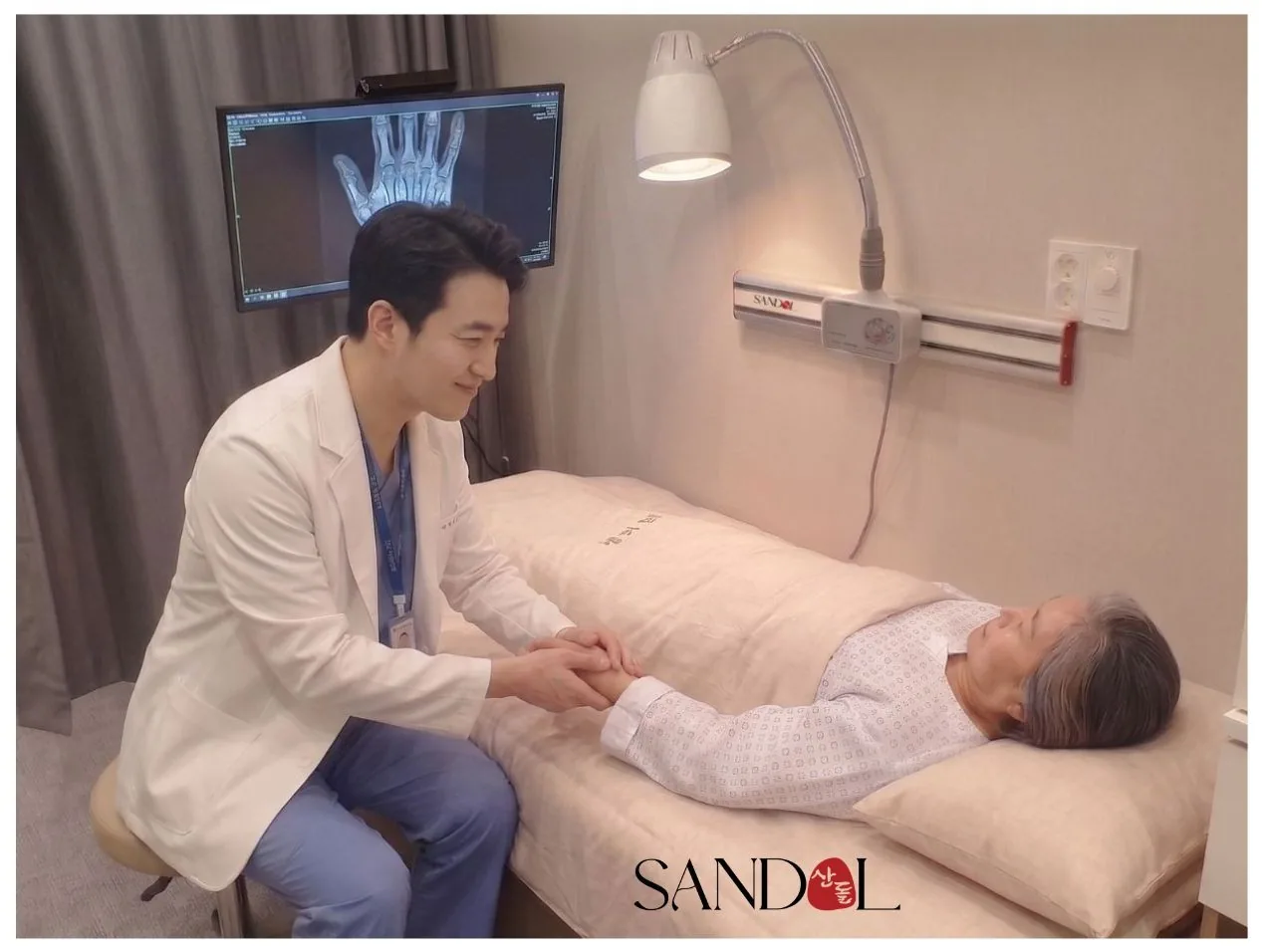
It is reported that in about 70% of disc-herniation patients treated conservatively without surgery, the protruding disc is reabsorbed naturally. Interestingly, severely herniated discs have also been found to tend to reabsorb more readily (though emergencies such as paralysis or loss of bowel and bladder control are exceptions).
So at Sandol we carefully distinguish cases that truly require surgery, while considering conservative treatment first where possible.
Learn more about natural disc reabsorption →Whether to admit you and your treatment plan are advised after consultation, based on your individual condition.
Headaches and migraines, jaw joint pain, and facial pain often appear together with tension in the neck and jaw and postural imbalance.
We treat the cause by examining the balance of the jaw–skull–cervical complex.
Many of the causes of head and facial pain are related to tension in the neck and jaw and to structural imbalance.
We restore jaw symmetry with an intraoral appliance and ease excessive neck tension with acupotomy, Chuna manual therapy, and pharmacopuncture, aiming to relieve pain at its root.
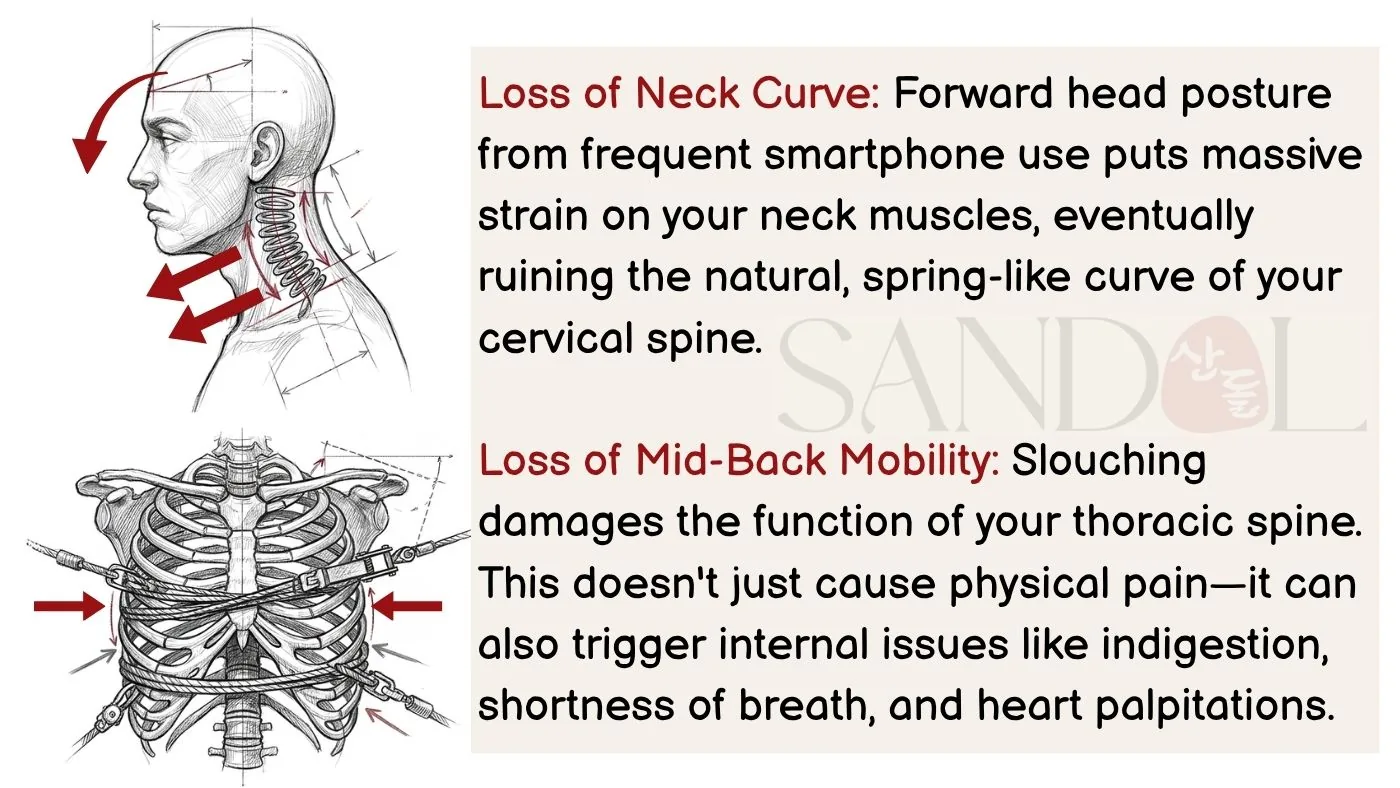
First, loss of the cervical curve or excessive tension is transmitted directly to the head and face.
Second, loss of thoracic mobility not only worsens an already disrupted cervical curve but is also linked to various internal conditions (indigestion, stomach cramps, impaired respiratory function, palpitations, chest pain, and more).
Third, the goal of treatment lies in restoring spinal function.
We will advise you on care tailored to your symptoms.
Neck stiffness, forward-head posture, and cervical disc problems can also lead to headaches or arm numbness. We examine neck alignment and the balance of the surrounding muscles together.
We address the cause of pain by examining cervical alignment together with tension in the surrounding muscles and nerves.
We restore structural balance and reduce nerve irritation with acupotomy, pharmacopuncture, Chuna manual therapy, and more.
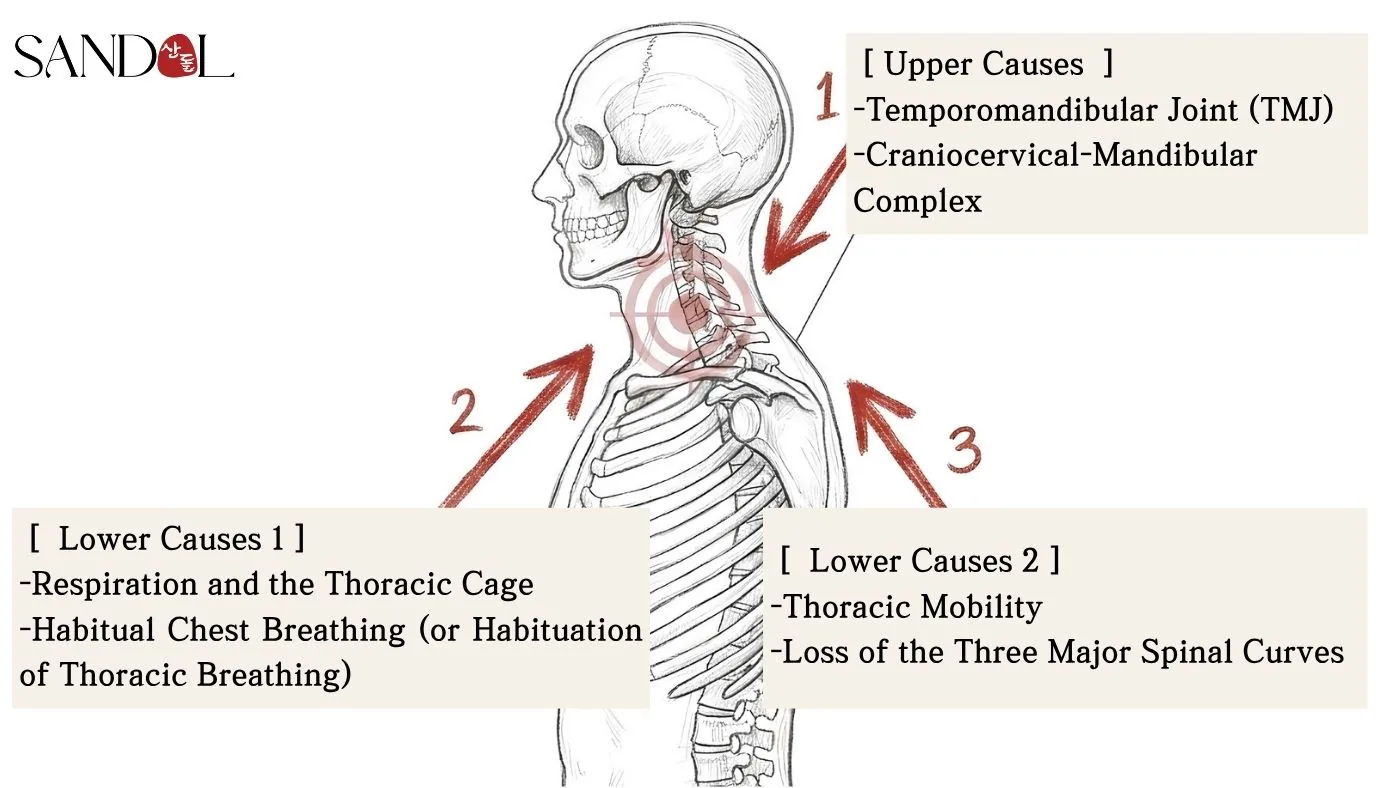
First, imbalance of the skull–cervical–mandible complex that begins at the jaw joint is an upper cause of neck pain.
Second, incorrect breathing habits are a cause of neck pain.
Third, loss of thoracic mobility created by poor posture is also a cause of neck pain.
In severe cases, we will also advise you on intensive inpatient care (inpatient disc care).
We treat the whole upper limb, from frozen shoulder and rotator-cuff problems to elbow, wrist, and finger pain. We examine the movement of the entire upper limb rather than the shoulder alone.
The root of restoring shoulder movement lies in the spine.
We ease the flow of nerves down to the shoulder through cervical correction, release adhesions with spinal acupotomy, and reinforce the injured area with shoulder thread embedding (maeseon).
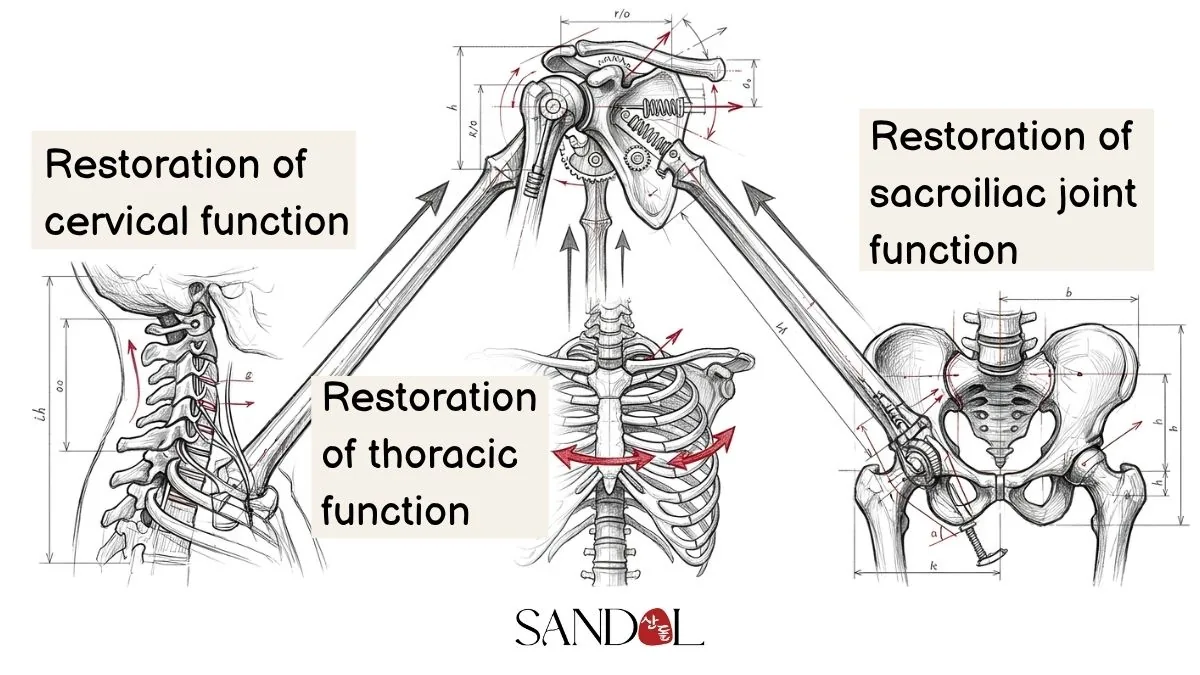
First, the cervical curve must be restored, because nerves from the neck control the shoulder.
Second, thoracic mobility must be restored, because the movement of the rib cage governs shoulder mobility.
Third, movement of the sacroiliac joint must be restored, because solid force transfer from the lower body to the upper body reduces the load placed on the shoulder.
If a tendon or ligament injury is suspected, we will also advise you on the necessary tests.
We treat pain that appears along the spine, including upper-back stiffness, low back pain, lumbar disc, and spinal stenosis. We examine spinal alignment together with whole-body balance.
We do not look at the lower back in isolation. Considering the spine's influence on the whole body, we provide treatment that restores whole-body balance.
We reduce pain and support stability around the spine with acupotomy, pharmacopuncture, Chuna manual therapy, herbal medicine, and more.
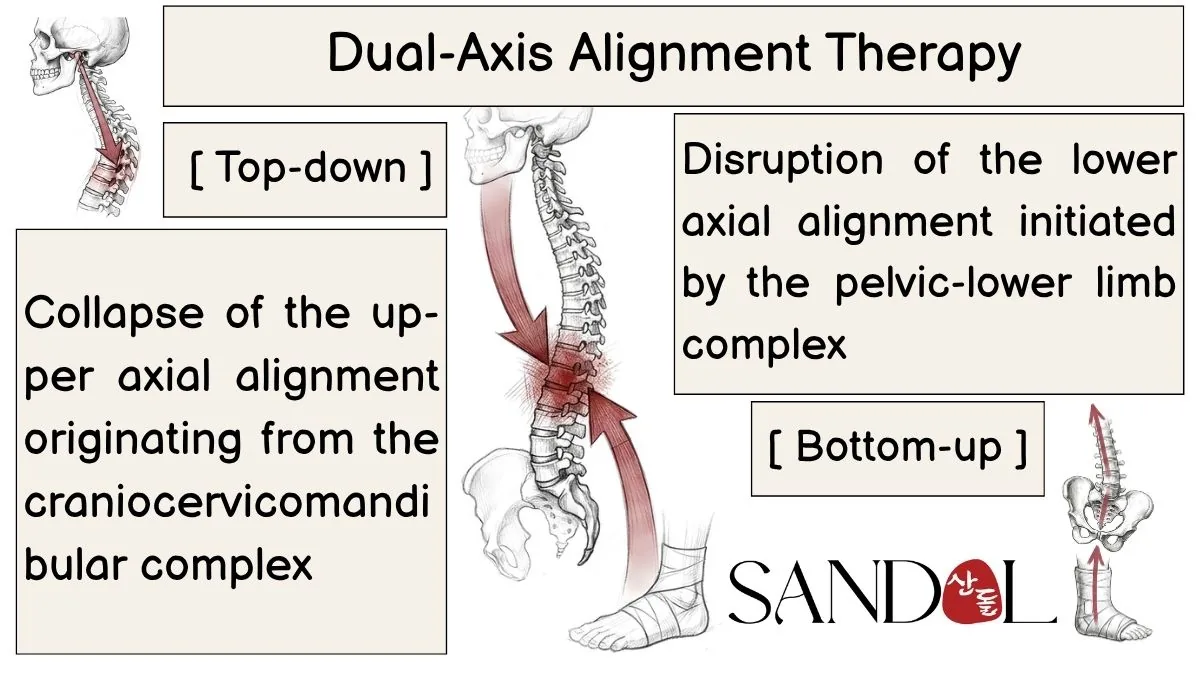
The Dual-Axis Alignment Technique (DAAT) is Sandol's signature treatment method.
We treat with a corrective protocol that realigns the Cranio-Pelvic Axis.
Only by addressing both causes at once — descending factors coming down from the skull–cervical–jaw complex and ascending factors coming up from the pelvis–lower-limb complex — can it be treated properly.
For severe pain or difficulty moving, we will also advise you on intensive inpatient care (inpatient disc care).
Chest pain of musculoskeletal origin — such as intercostal neuralgia, pain around the thoracic spine and ribs, and stiffness when breathing — is a sign that poor lifestyle habits are overworking the thoracic spine.
We address the cause of pain by examining the tension and alignment of the thoracic spine, ribs, and surrounding muscles together.
We restore rib-cage mobility by improving breathing and spinal movement with diaphragm-release Chuna therapy, breathing correction, acupotomy, and more.
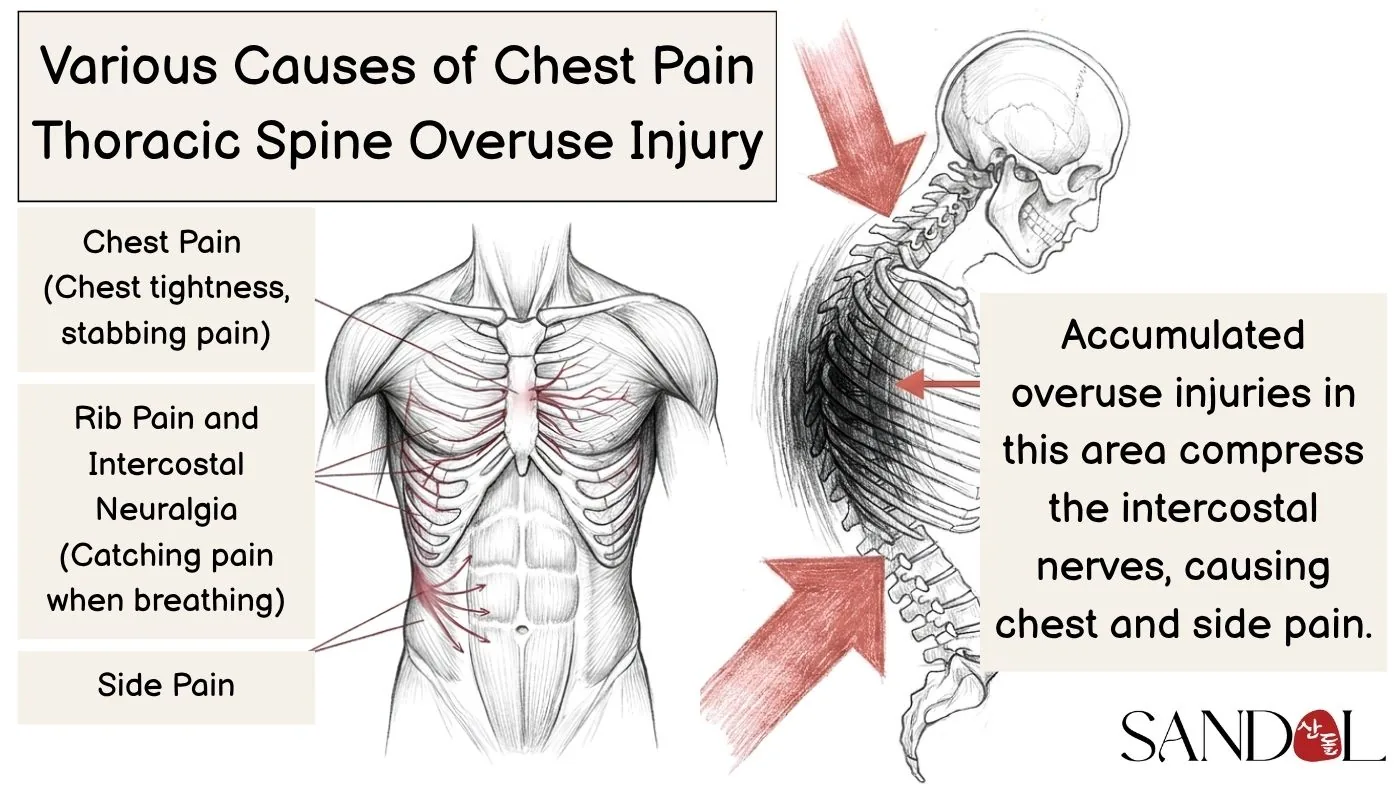
There is chest-area pain that stems from musculoskeletal causes.
When poor posture accumulates over time and causes an overuse injury to the thoracic spine, pain can arise around the chest.
For pain of visceral origin, we will advise you on the relevant tests.
If an internal cause involving the heart or lungs is suspected, we recommend having the relevant tests first.
We treat the whole lower limb, including pelvic imbalance, sciatica, and pain in the knee, ankle, and foot.
Twisting and loss of mobility along the axis running from the head to the pelvis leads to imbalance of the pelvis, affecting even the knees and feet.
Rather than the painful spot alone, we examine the alignment and balance running from the pelvis to the knee to the foot.
We reduce pain and support lower-limb movement with acupotomy, pharmacopuncture, Chuna manual therapy, and more.
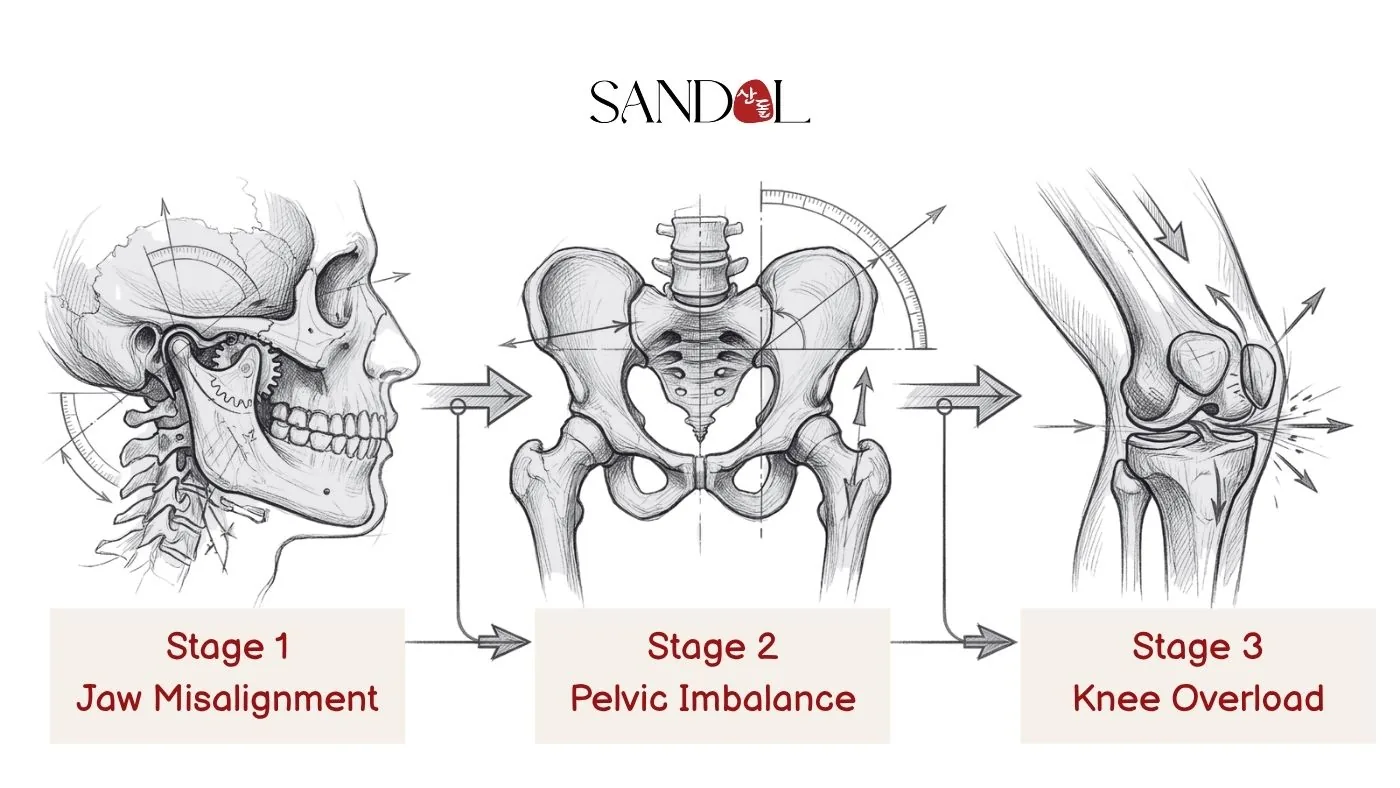
The cause does not lie where it hurts.
The cause lies in a structural chain collapse created by problems in the jaw and spine.
If a ligament or cartilage injury is suspected, we will also advise you on the necessary tests.
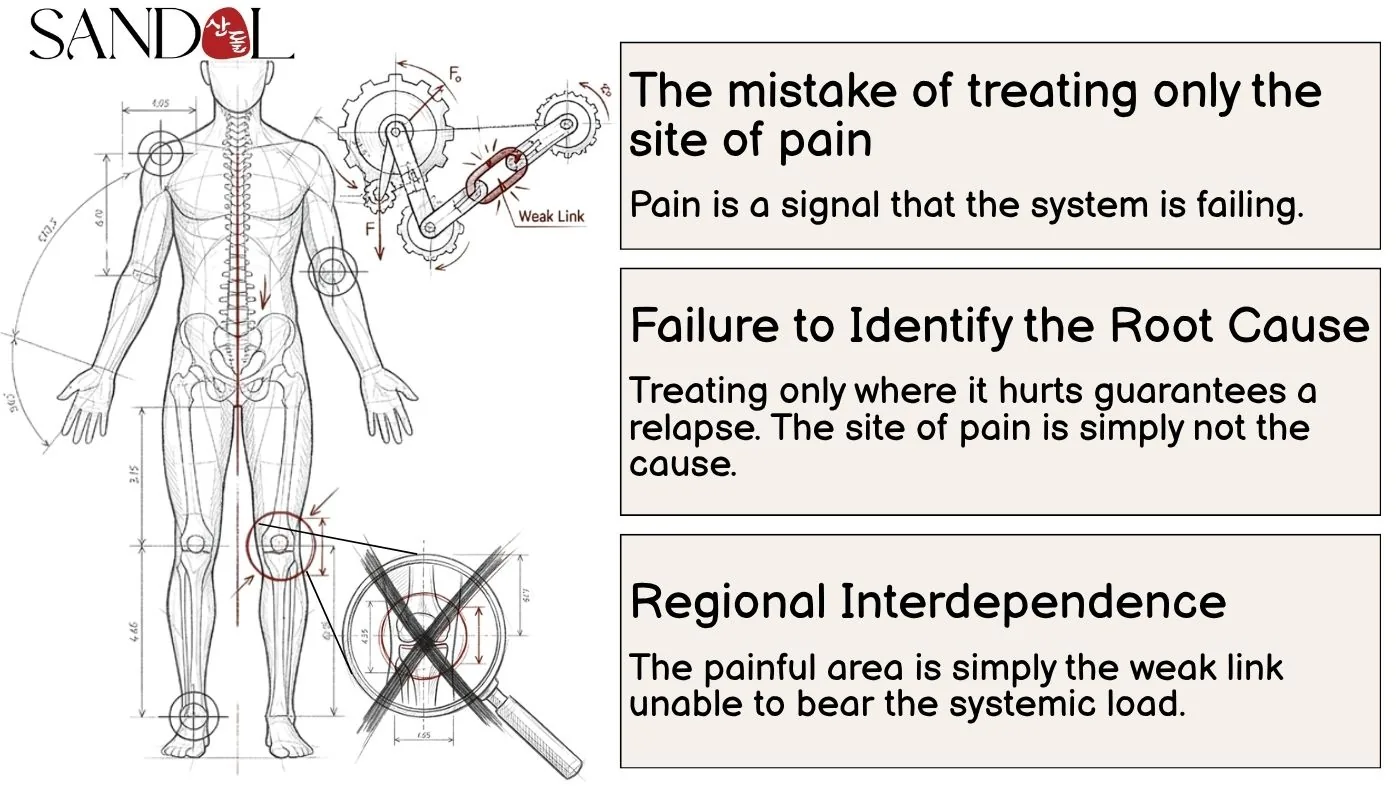
The areas differ, and so do the symptoms.
Yet if you follow the pain inward, it all meets at the same root.
Focusing only on where the pain appears tends to let it recur. A fundamental approach that restores the root is needed.
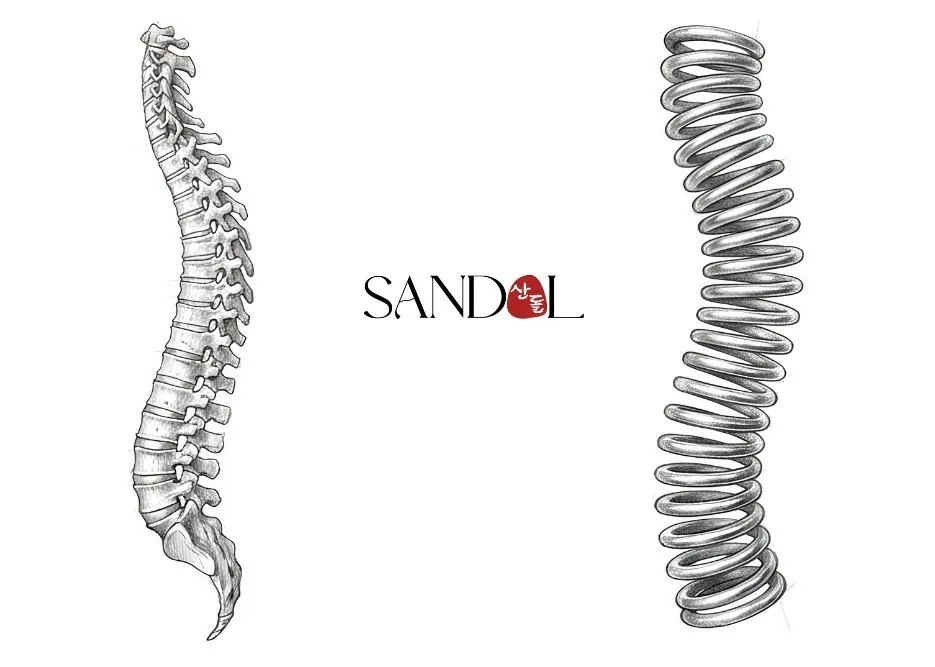
The spine is made of three curves and absorbs shock much like a spring. This spring-like cushioning structure supports the body's dam that holds back external shock.
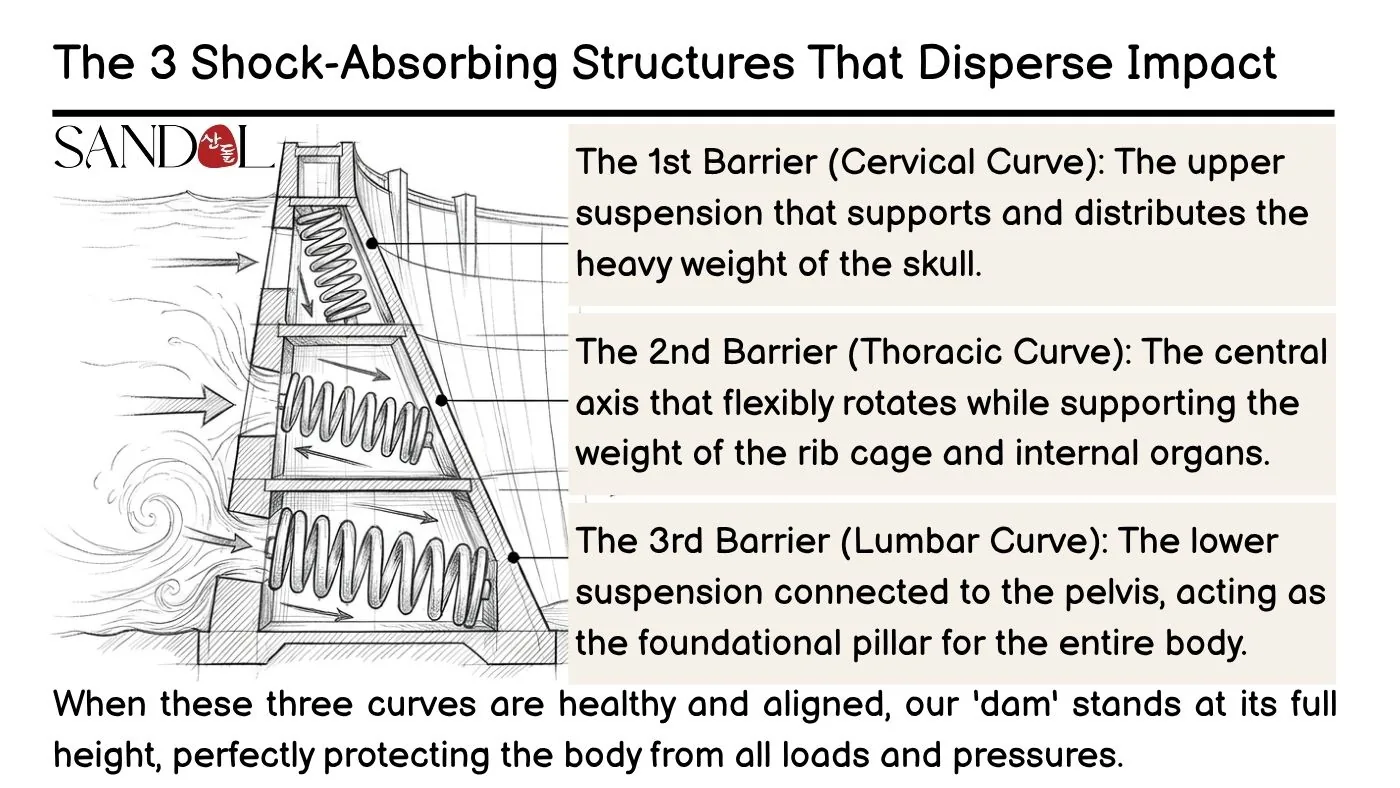
The three-curve structure of the spine firmly defends against most of the shocks we encounter in daily life.
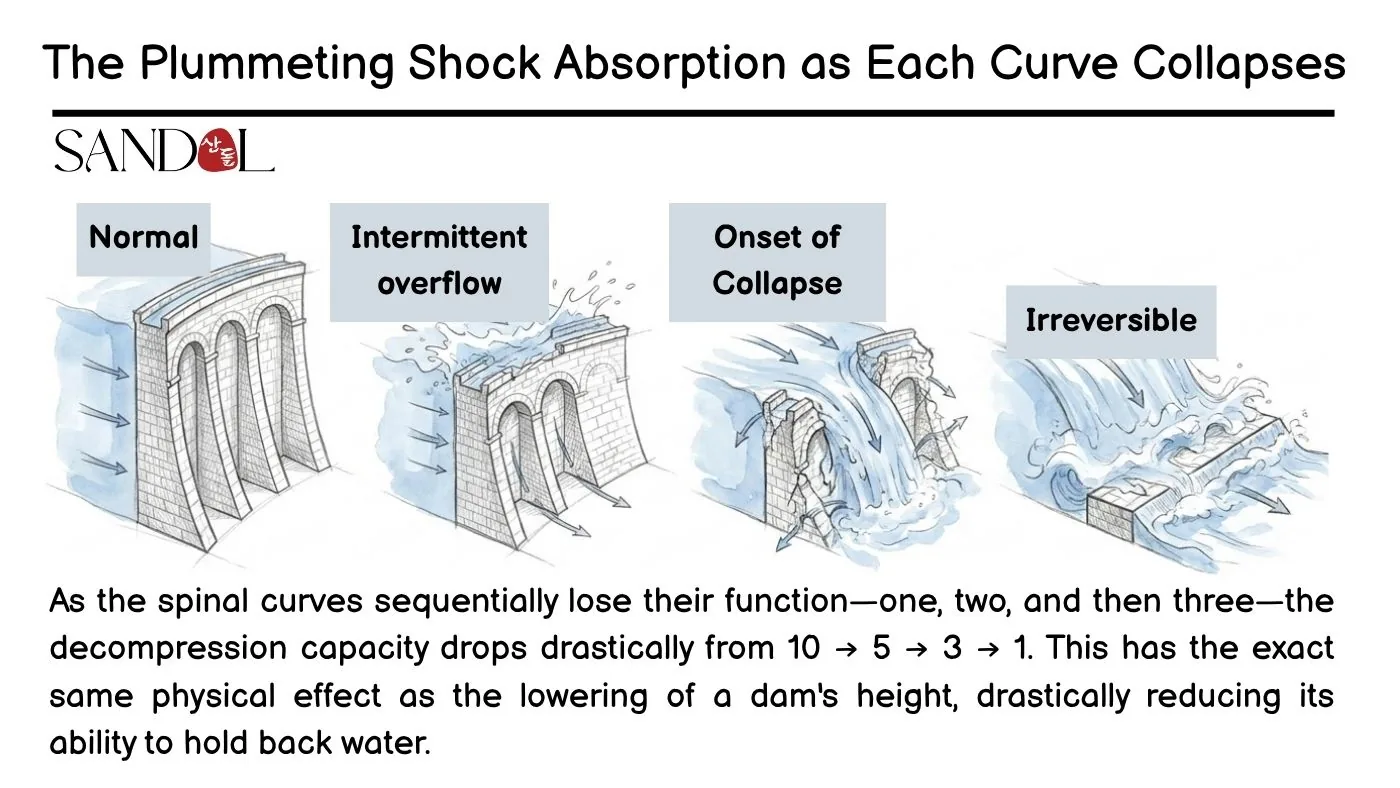
The sequential collapse of the three curves is the cause from which pain begins. Each time one curve loses its function, the capacity the dam can withstand also drops.
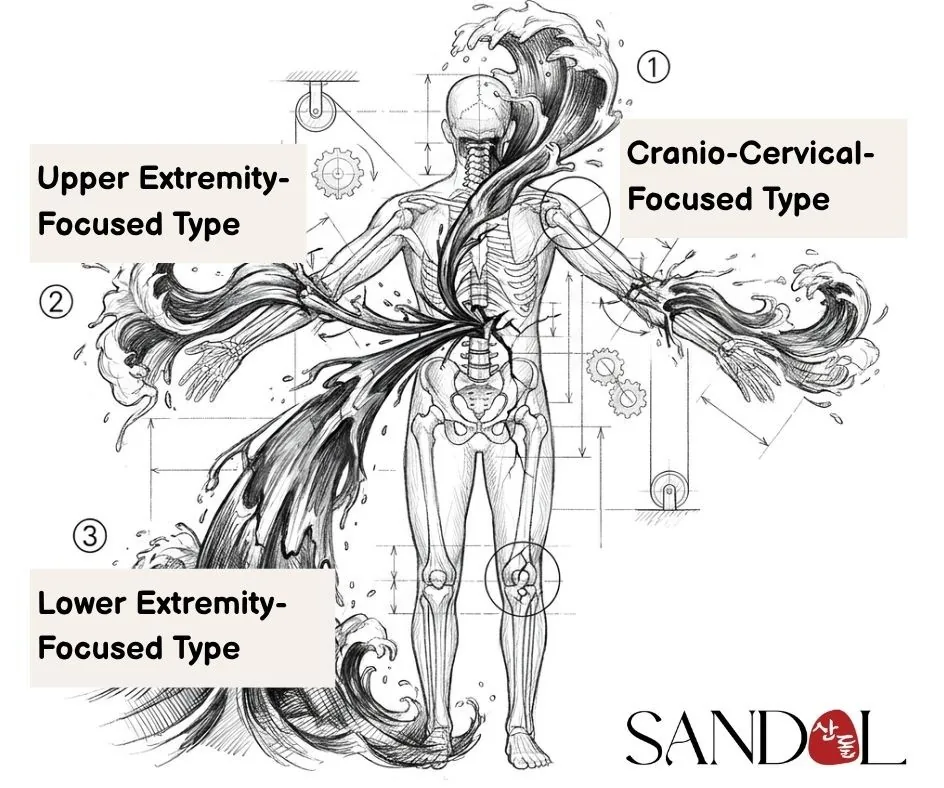
Just as a broken dam causes a flood, when the spinal curves that served as the body's dam collapse, shock that was not absorbed overflows throughout the body.
Just as water floods toward the lowest point, pain heads toward the weakest point.
That is why the area where pain appears differs from person to person, yet its root is the same.
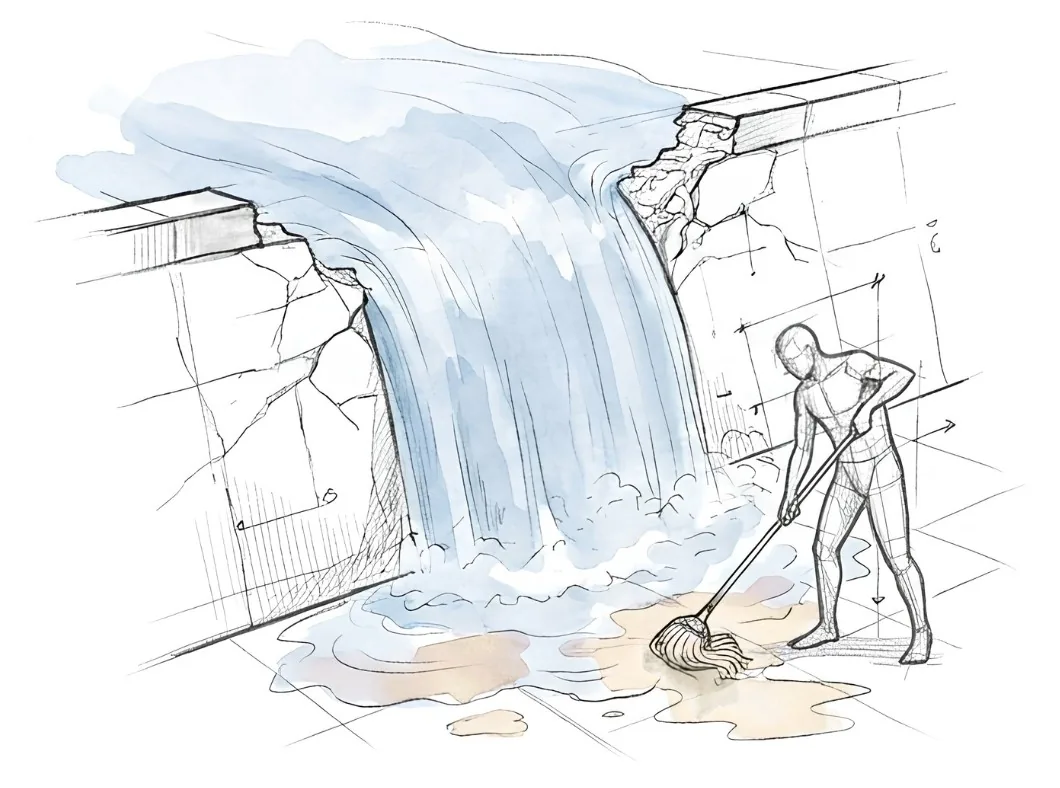
If you repair only the flood-damaged area, the flooding recurs every year.
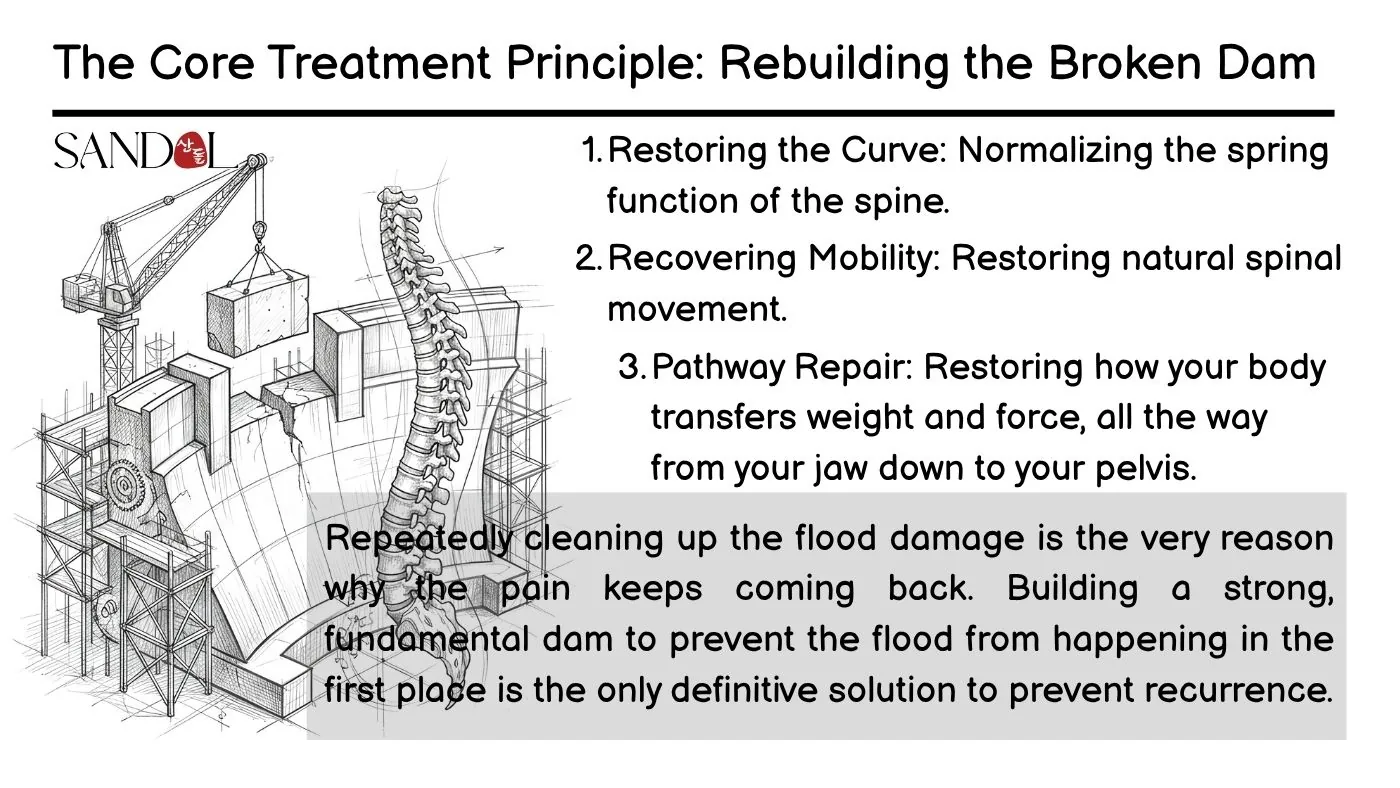
Repair of the flood-damaged area and rebuilding of the dam must happen at the same time to fundamentally lower the risk of recurrence.
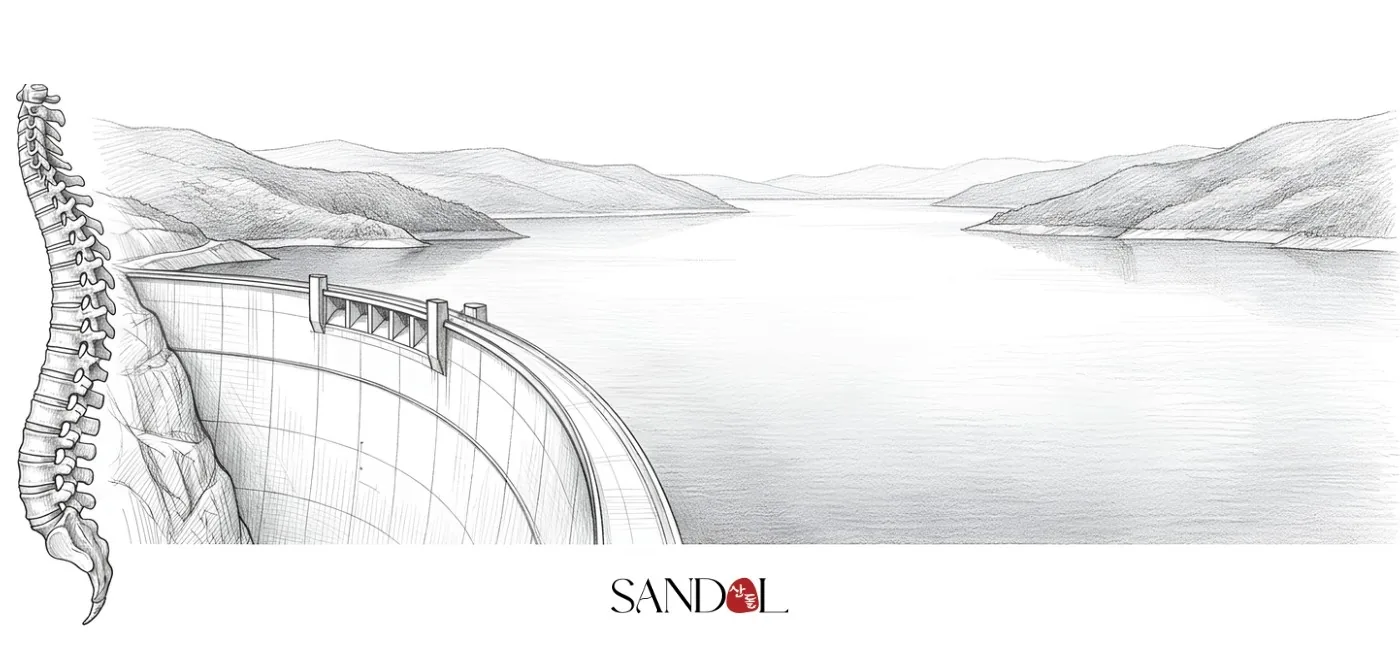
Just as a solid dam calms a vast body of water, only by restoring sound spinal function can the body's pain be calmed as well.
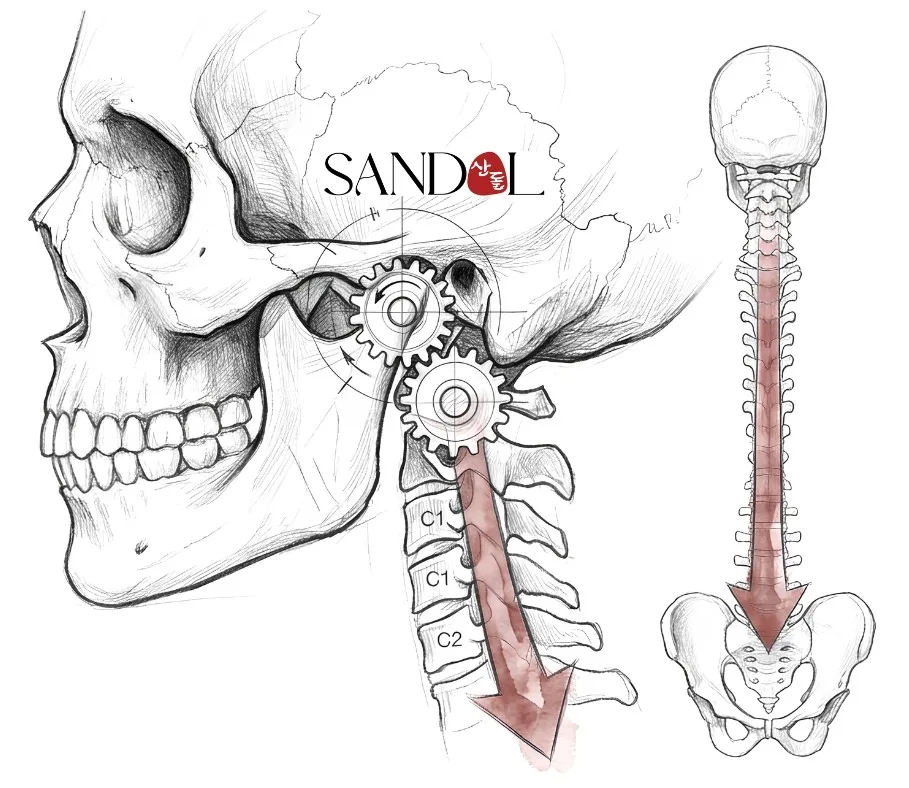
The hidden regulator of the spine: the jaw joint
A subtle misalignment of the jaw joint can affect the balance of the entire spine.
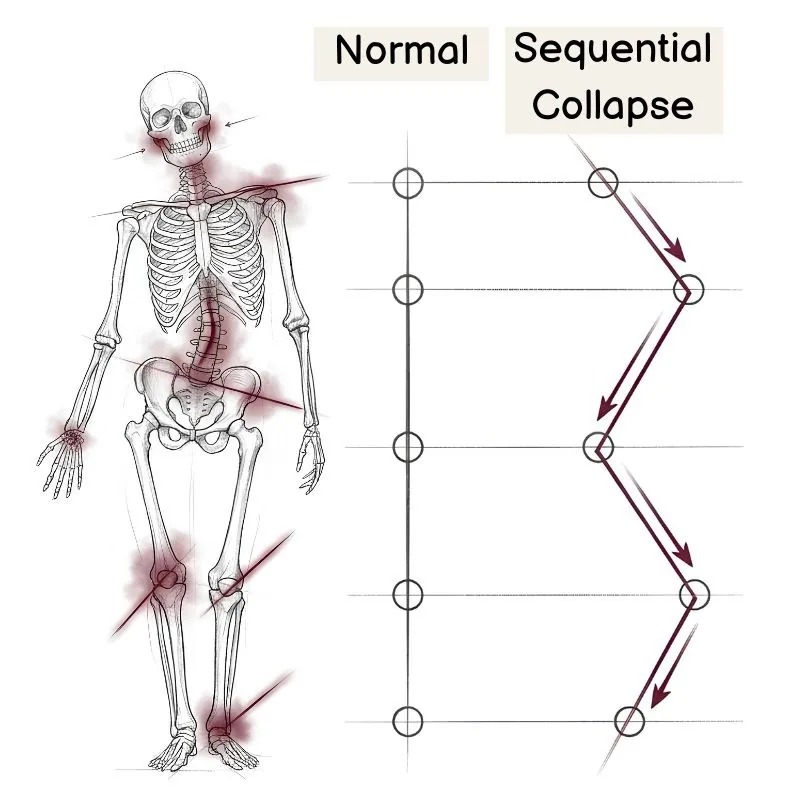
A misalignment of the jaw can affect, in a chain, the balance of the neck, shoulder, back, waist, pelvis, knee, and foot.
At Sandol we approach the underlying cause of pain through the jaw joint, the regulator of the spine, and through methods that directly restore spinal mobility.
More details on the jaw joint can be found at the TMJ Balance Medicine Clinic.

PRACTICE HOURS UPDATE
Evening sessions end, and hours will be as follows.
Each doctor’s schedule