Why the jaw joint, of all things?
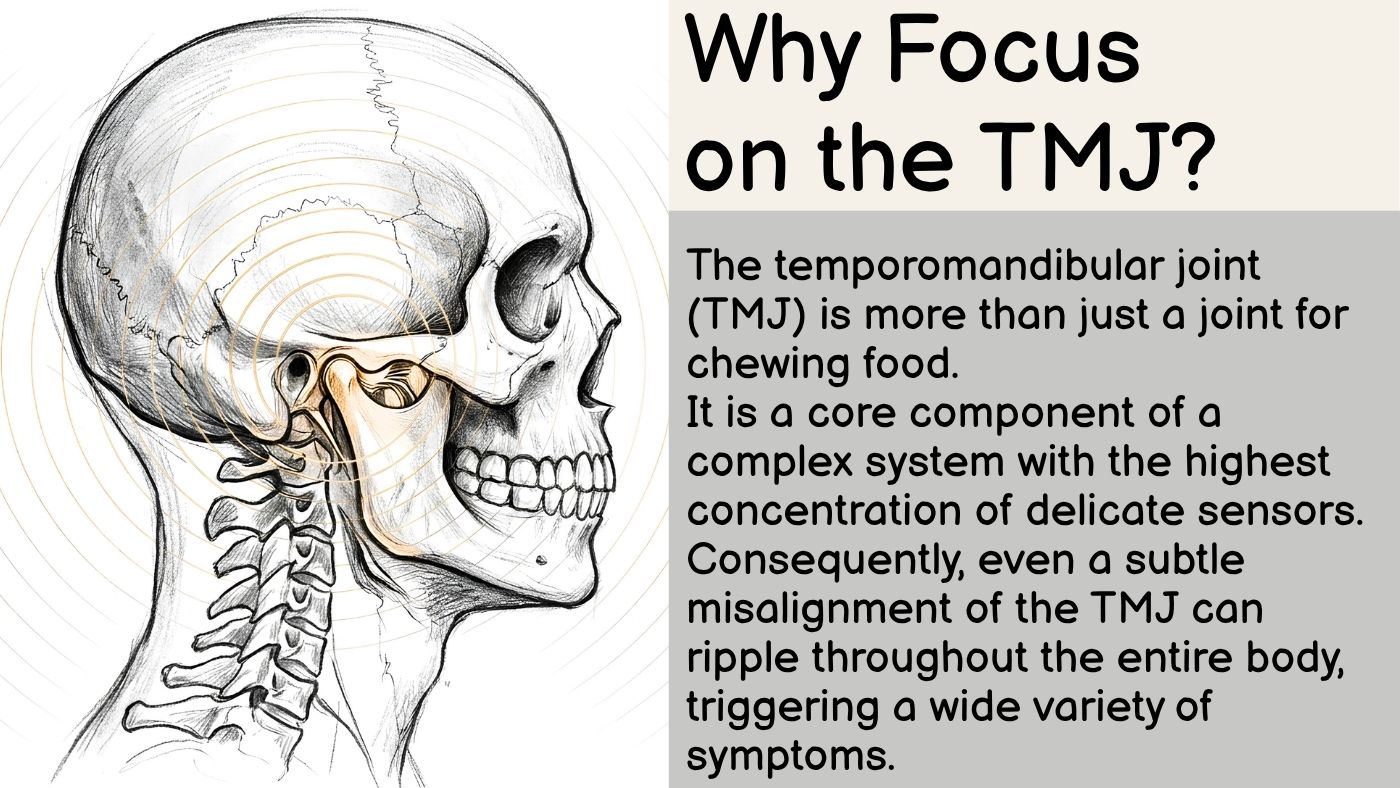
The jaw joint is not merely a joint for chewing. It is a core member of a complex where the body's most delicate sensors are gathered at the highest density. That is why even the tiniest misalignment here can work its way throughout the body and give rise to a wide range of symptoms.
① The site of the crossroads
The jaw joint sits at the point where the cranium and the cervical spine interlock, and right beside it run the trigeminal nerve, which governs facial sensation, and the vagus nerve, which enables the body's automatic systems. The jaw joint influences the body's balance because of its subtle "location."
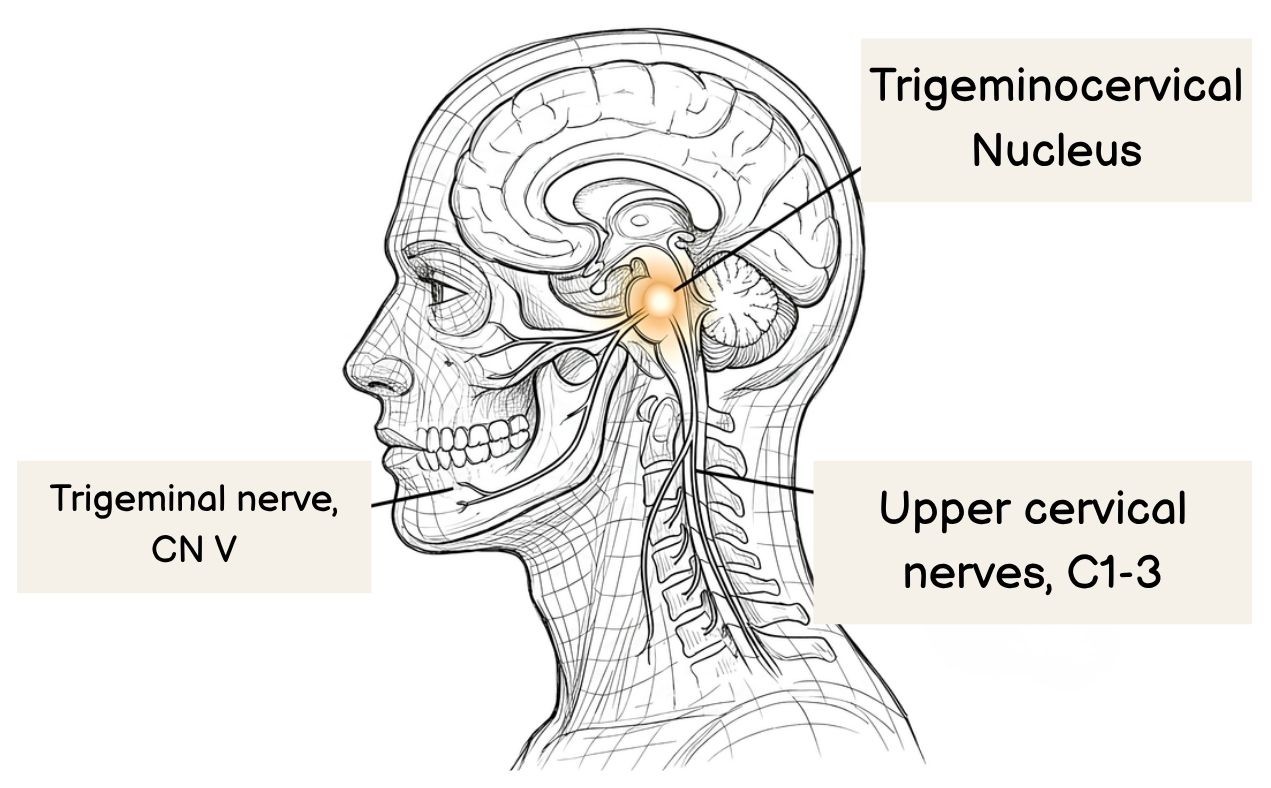
② The crossroads inside the brain where jaw and neck meet
Signals from the jaw and signals from the neck merge at a single point in the brainstem (the trigeminocervical convergence). This is why a jaw problem can be felt as pain in the neck and head, and conversely a neck problem can show up in the jaw. It is why "the jaw hurts and so does the neck, the neck hurts and so does the jaw" — they travel together.
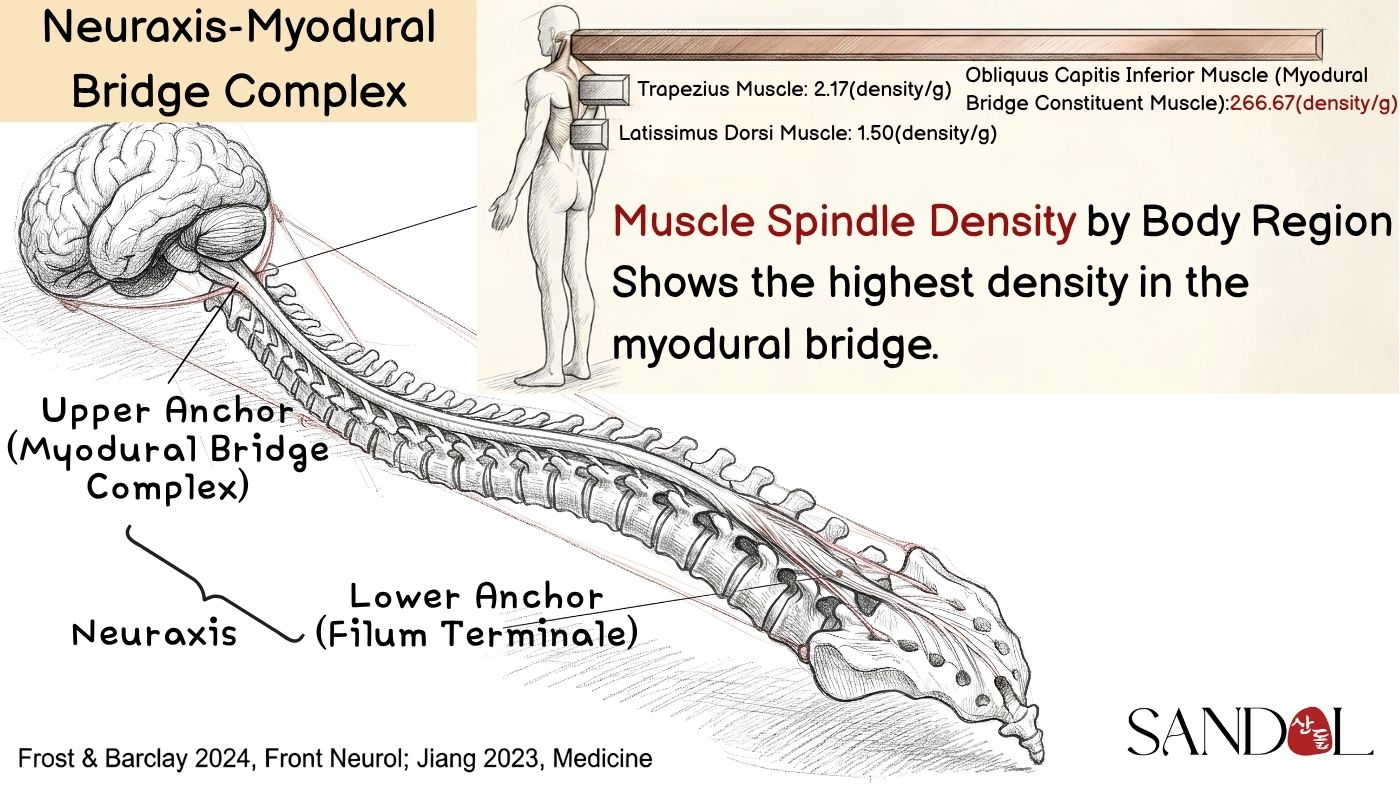
③ Muscle connects directly to the membrane around the brain and spine
The suboccipital muscles that connect the head and neck are directly linked to the membrane (dura mater) that wraps the brain and spinal cord (the myodural bridge). What's more, this region holds the densest concentration in the whole body of "position-sensing sensors" (muscle spindles). So even a very small positional deviation of the jaw–neck can trigger large changes throughout the nervous system, affecting pain perception, postural maintenance, and the sense of balance in many ways.
When the jaw joint wavers, this entire crossroads wavers with it. That is why Sandol looks not at "the place" where symptoms surface, but at "this site" where the signals begin.
When the jaw joint's balance collapses — signals that may appear stage by stage
The painful areas differ, but the root may be one — the balance of the jaw–cranium–cervical complex. Below is an overview of the signals that may appear in stages when that balance breaks down.
| Stage | Category | Related area | Symptoms that may appear |
|---|---|---|---|
| Early (acute) |
Acute type 1 Confined to the jaw joint |
The jaw joint itself | Jaw joint pain, limited mouth opening, zigzag movement, clicking/crepitus, subluxation of the jaw, and more |
| Acute type 2 Spreading to adjacent areas |
Areas adjacent to the jaw joint | Headache/migraine, dizziness, facial pain/trigeminal neuralgia, ear pain/tinnitus/hearing loss, neck & shoulder pain, nasal congestion/rhinitis/mouth breathing/snoring, eye pain/eye fatigue, teeth grinding/clenching, and more | |
| Chronic course |
Chronic type 1 Linked to the spine & posture |
Spinal structure & whole-body posture | Cervical & lumbar disc-related symptoms, spinal stenosis, abnormal spinal curvature (straight neck, reversed cervical curve, loss of thoracic curvature, flat back, scoliosis, etc.), malocclusion, facial asymmetry, and more |
| Chronic type 2 Chronic & complex stage |
Whole body, when prolonged | May lead to complex symptoms such as chronic headache/chronic dizziness, chronic fatigue, insomnia, indigestion, and low motivation (varies widely by individual) |
Reference: Adapted by Sandol Korean Medicine from the classification framework in Lee Young-jun, A new therapeutic approach to dystonia (2023, Ilyeon Publishing, USA).
※ The symptoms above are those that may appear in association with temporomandibular disorders; they do not guarantee any causal relationship or treatment outcome and vary by severity and individual.
1-minute self-check — is your jaw doing okay?
Check the items that apply to you. The list below is a simplified reference; at your visit you will complete a detailed questionnaire of more than 100 items.
The jaw itself
Nearby spread
Structure & posture
Autonomic & whole-body
Sandol focuses not only on the "symptoms" but on the "root"
Cause and effect must be approached in different ways. Symptoms that seem unrelated may in fact have begun from the same root. If you chase only the painful spot, you can miss where it originates. Sandol targets the source where the illness began.
① Chase the symptoms, and they will surely return
Physical therapy or painkillers may bring brief relief. But if the cause remains, the symptoms come back. If you are diligently receiving treatment yet still relapse, or live dependent on medication, it may be because only the painful area was addressed while the root of the pain was left untouched.
② The butterfly effect of a small change
When a subtle asymmetry of the jaw joint accumulates over a long time through bad habits — poor posture, resting the chin on the hand, sleeping face-down, chewing gum, chewing on one side, grinding and clenching the teeth — the first and second cervical vertebrae begin to shift. The many neck muscles connected here then fall into structural and functional imbalance, and compensatory deformation follows. An abnormal signal that first began near the jaw can, over time, spread to the head, face, neck, ears, shoulders, and lower back, and further to autonomic dysfunction and breathing disorders.
③ As dripping water bores through rock, the ripple effect of a tiny jaw misalignment
The jaw joint is the only joint that never stops, 24 hours a day. Every 30 seconds to a minute we swallow without thinking, and even in sleep the jaw is called upon to swallow without rest. Swallowing creates a considerable negative pressure inside the mouth; when you swallow with the jaw misaligned, the asymmetric force created by front-back, left-right, and horizontal tilt is transmitted each time to the upper cervical spine. Repeated hundreds of times a day, this action — like dripping water boring through rock over time — slowly enlarges the body's imbalance from the imbalance of the jaw joint.
Not Sandol's claim, but what the research says
That the jaw is linked to whole-body balance is something research at home and abroad has observed for a long time. Here we introduce some representative evidence. Note, however, that the studies below show "association" and "possibility"; the degree and speed of recovery vary by individual and severity, and the same result cannot be guaranteed for everyone.
A — Early: the jaw's signals reach nearby
A1. The jaw and neck move as one
With a temporomandibular disorder, neck mobility and muscular endurance decline; conversely, training the deep neck muscles improved jaw symptoms (randomized controlled trials).
A2. Painful TMD and headache go together
Pooling multiple studies, temporomandibular disorders accompanied by pain were clearly associated with migraine and tension-type headache.
A3. Managing the jaw can also ease the ears
When an intraoral appliance reduced jaw pain, the severity of tinnitus decreased along with it (severe-tinnitus study). There are also reports that tinnitus more commonly accompanies temporomandibular disorders of unknown cause.
B — Chronic course: into structure and the whole body
B1. When the bite collapses, the body sways
The closer the mandible's position came to left-right symmetry, the more evenly the neck muscles contracted, and body sway while standing decreased.
B2. Balancing-appliance treatment changes structure
After occlusal-appliance treatment, the normal cervical curve (lordosis) was restored, and in cases of facial asymmetry the mandibular condyle remodeled and the symmetry of the mandible improved (imaging studies).
B3. The science of 0.05mm
The suboccipital muscles connecting the head and neck carry the densest distribution in the whole body of position-sensing sensors (muscle spindles), and they connect directly to the dura mater wrapping the brain and spine (the myodural bridge), so even a very small change in position is transmitted as a signal to the entire nervous system.
This evidence is only a small part of the story. We explain each topic in more detail during your visit, based on the research and tailored to your situation.
Two approaches, matched to your condition
The path to restoring jaw-joint balance differs by condition. Mild stages use the "standard" appliance, while moderate and above combine the "custom" and "standard" appliances.
Intraoral balancing appliance (IBA)
From more than 40 precisely pre-designed balancing appliances, we select and prescribe the one best suited to the patient's condition. Worn during everyday life to gradually recover the lost balance, it is used alone in mild stages and, in moderate and above, together with the custom appliance to speed recovery. The appliance may be changed in stages as needed.
0.05mm micro-correction
We measure the height difference between the left and right jaw joints in units of 0.05mm and make, on the spot, an appliance for that person alone to correct it. This is our most precise approach, applied to moderate-and-above and long-standing imbalance.
How the custom approach is this precise — 0.05mm, and the cube
Like solving a scrambled cube one square at a time, we reverse a long-standing imbalance stage by stage.
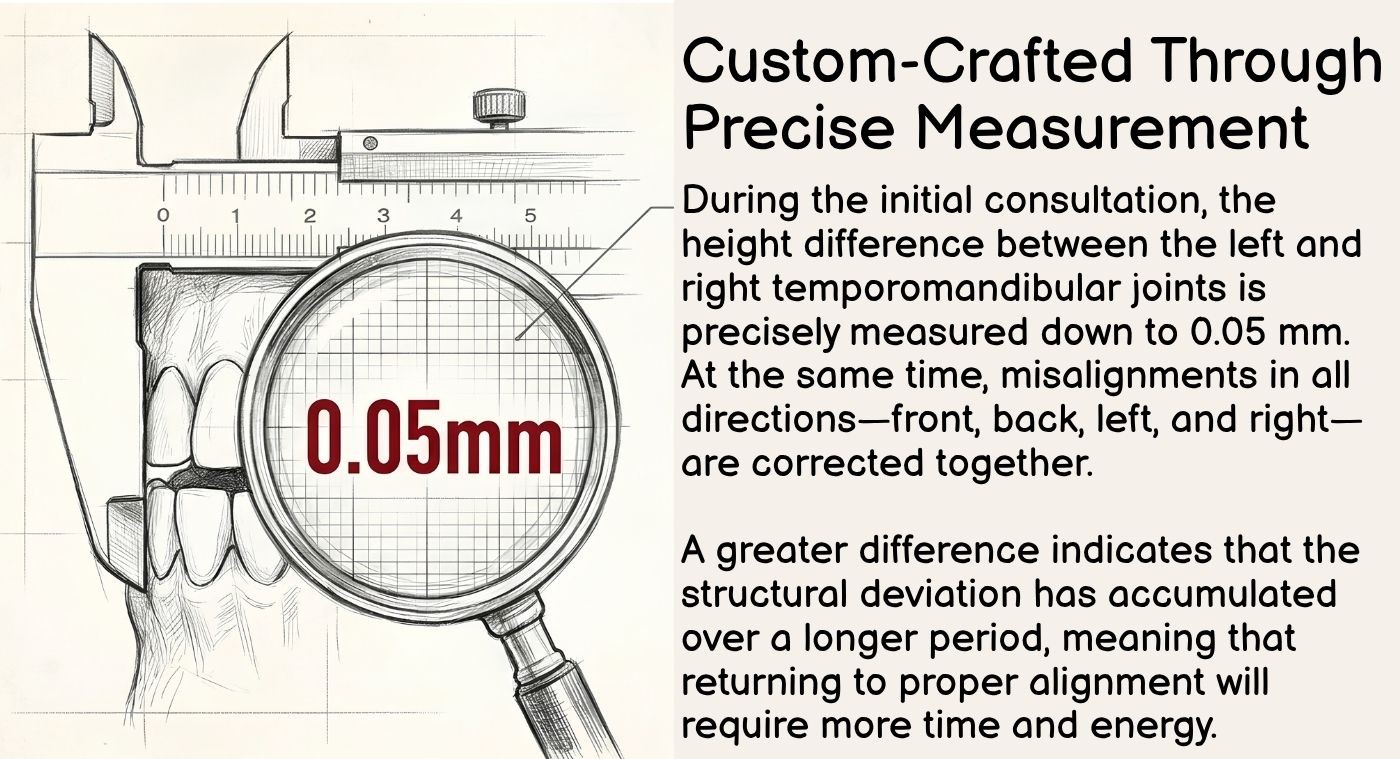
We measure precisely and fabricate
At the first visit we precisely measure the height difference between the left and right jaw joints in units of 0.05mm. At the same time, we correct front-back and left-right misalignment together. The larger the difference, the longer the misalignment has accumulated, and the more time recovery accordingly requires.
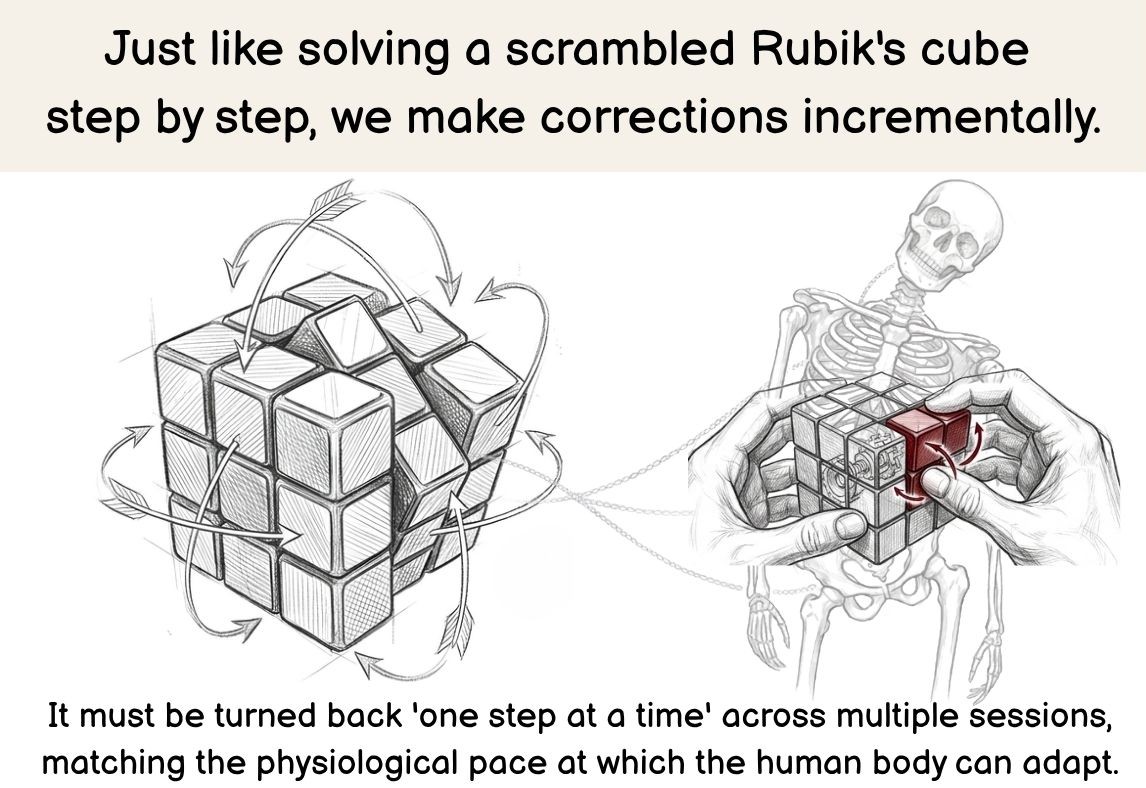
Like solving a cube, we repeat corrections many times to find balance
A long-disrupted balance is like a scrambled cube. Just as a cube cannot be solved in one move, the jaw cannot be corrected all at once. So we adjust 0.05mm at a time, over many sessions.
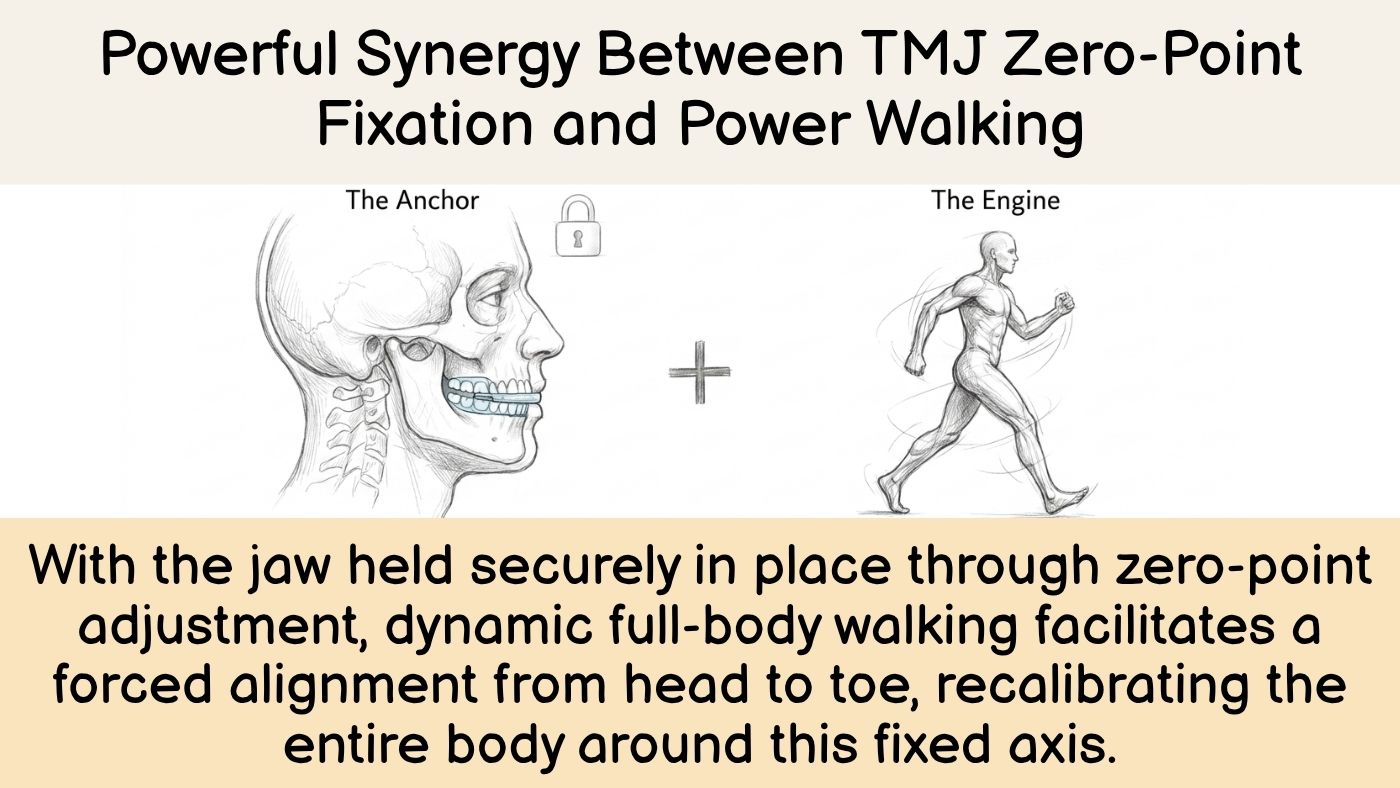
Zero-point adjustment of jaw position → power walking → whole-body micro-correction through movement
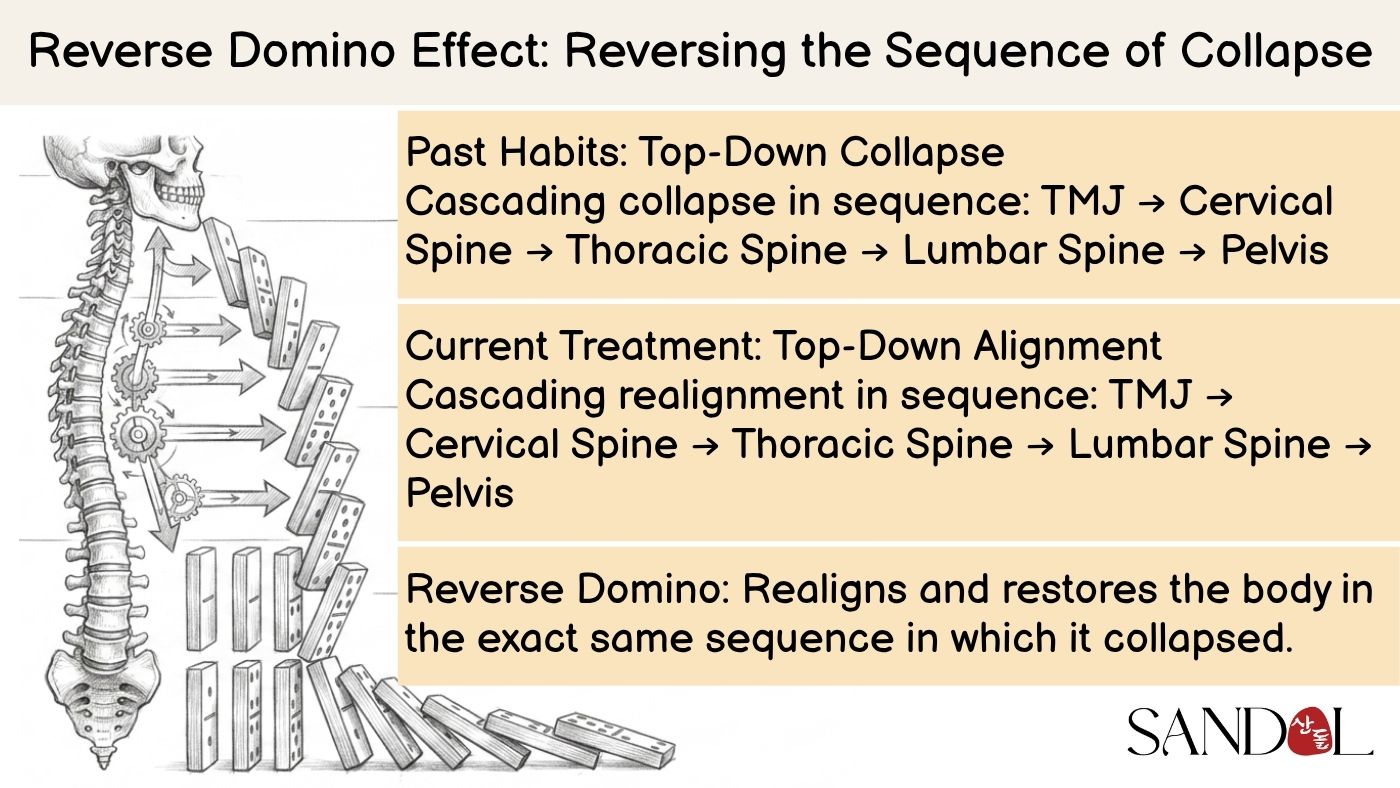
Wearing the appliance made at the zero-point position, the patient power-walks for about two minutes. By holding the jaw — the upper reference point — firmly fixed while moving the whole body powerfully, micro-alignment proceeds from head to toe against that reference. It is a process of reversing, in the very same order, the chain of collapse that the jaw's twist set off like falling dominoes. The moment the body finishes adapting to the balance point created by a 0.05mm micro-correction — we call this the "deviation" — we then re-measure and advance to the next 0.05mm correction. We steadily repeat this work until ultimate equilibrium is reached.
Safety always comes first
Adapting the whole body step by step to a new balance point consumes a great deal of energy. So we set a daily number of corrections to avoid overexertion as much as possible (3–4 times a day for those with less stamina, up to 10 times for those with more).
Repeating micro-adjustments in units of 0.05mm in this way, we advance toward the ultimate goal — complete left-right symmetry.
The speed of recovery is decided by the patient's participation
Even with the same treatment, recovery speed differs from person to person. Three things govern it: ① how often you visit and how many treatments per visit; ② the daily cumulative wear time of the standard appliance; and ③ practicing the exercises done while biting the appliance (full-body stretching and cervical-gravity stretching). Only when the patient's practice accompanies the medical team's treatment can we reach the destination we want.
Expertise built on years of accumulated training
This micro-correction, working at 0.05mm, is a refined skill that becomes reliably achievable only after years of training and clinical practice. Sandol has honed this skill over a long period.
What you'll experience during treatment — knowing in advance puts you at ease
Everyone feels some discomfort when first wearing the appliance. This is a natural adaptation response as the teeth and jaw find their place. Knowing in advance what to expect helps you pass through the process far more comfortably.
1The discomfort passes
Tooth or gum pain and mild nausea in the early days of wear are normal responses that most patients experience. Usually you grow comfortable gradually over a few days to a few weeks. Discomfort that had gone away may return, but this too is part of the recovery process.
2Safety always comes first
When it hurts, don't endure it. Take the appliance out and rest for a while, then put it back on once you feel comfortable. Start with short daytime periods and lengthen the time little by little, proceeding at the pace your body accepts.
3We check in together every month
You visit once a month so we can check the appliance and the changes in your body together. This is not a treatment you endure alone, but one we monitor and fine-tune by your side.
Detailed usage guidance for those wearing the appliance is available in the Intraoral Balancing Appliance User Guide.
The medical team for TMJ Balance Medicine


The team alongside them



Diet Clinic · Skin Booster Clinic

Anti-aging (Tonic) Clinic · Autonomic Dysregulation
Frequently asked questions
Q. My jaw doesn't particularly hurt, so why would I need TMJ treatment? +
Q. I've been to many places but no one could find the cause. Could it be related to my jaw? +
Q. My jaw makes a sound but there's no pain. Do I need treatment? +
Q. What methods do you use for treatment? +
Q. How do the standard and custom appliances differ? +
Q. Does the treatment hurt? +
Q. Can symptoms actually get worse during treatment? (deviation response / healing crisis) +
Q. How long does treatment take? +
Q. How long do the treatment results last? +
The root of scattered symptoms — start again from balance
Clinic information
and we'll email you about your reservation.